 Clinical trials are research studies in which patients can choose to participate. Rutgers Cancer Institute uses clinical trials to find better ways to prevent, diagnose, and treat cancer. Physician-scientists are engaged in innovative clinical trials, investigating a broad spectrum of new therapies, diagnostics, preventive options, and cancer survivorship strategies. As an NCI-designated Comprehensive Cancer Center, Rutgers Cancer Institute provides patients with access to innovative and advanced treatment options that are often not available elsewhere.
As a Comprehensive Cancer Center designated by the National Cancer Institute, Rutgers Cancer Institute receives distinct resources and support to lead and participate in cutting-edge, high-impact clinical trials. Our designation sets us apart from other healthcare organizations, allowing us to provide our patients with access to novel treatments that are not yet available through standard clinical practice. With over 280 active cancer clinical trials and more than $170 million in annual research funding and over 300 research members, Rutgers Cancer Institute is turning these discoveries into new ways to prevent and treat cancer that is shaping the future of cancer care in New Jersey and beyond.
Today, cancer survivors are living longer and cancer patients are benefitting from breakthrough therapies and treatments that are the result of past clinical trials. We enroll approximately 17% of adult cancer patients, and 70% of pediatric cancer patients, in clinical trials. The national rate of clinical trial enrollment for adult cancer patients is fewer than 5%. Clinical trials form the cornerstone of the development of new cancer treatments, giving patients hope that even greater discoveries are on the horizon.
To learn more about participating in a clinical trial, visit the National Institute of Health’s website NIH Clinical Research Trials and You.
For more information about our clinical trials call 732-235-7356 or search for a clinical trial.
Understanding Cancer Clinical Trials
Why are cancer clinical trials important in cancer care?
In this video, Dr. Howard Hochster explains why clinical trials are imperative for continued new drug discovery in cancer care and discusses the advantages of receiving cancer care at an NCI-designated cancer center such as Rutgers Cancer Institute and its partner, RWJBarnabas Health.
Conversations between a Nurse Navigator and a cancer survivor about clinical trials.
Watch the whole video or individual sections covering these topics:
• What is a clinical trial?
• Value in clinical trials.
• How do cancer clinical trials work?
• Do cancer clinical trials withhold treatment?
• Tuskegee and clinical trials.
• How are patients protected in clinical trials?
• What is informed consent?
• Who pays the cost of a clinical trial?
• How do I find a clinical trial?
• Navigation assistance for clinical trials.
Patient Stories

Team Jimmy
No parent ever wants to hear their child has cancer. But when the Tanseys received this news about their toddler Jimmy, they knew they were in good hands with coordinated care between Monmouth Medical Center, Rutgers Cancer Institute and The Bristol-Myers Squibb Children’s Hospital at Robert Wood Johnson University Hospital.

Finding Her Way Back
Only in her 20’s, Kelly Moyer never imagined she would be sidelined by triple-negative breast cancer. But thanks to a clinical trial and collaborative care between Rutgers Cancer Institute and Robert Wood Johnson University Hospital Hamilton, she is back on track with life.

Hope Amid Uncertainty
Already busy caring for a school-aged, special needs child, Tennica Johnson-Campbell faced another challenge in battling multiple myeloma. She found hope in a CAR T-Cell therapy clinical trial at Rutgers Cancer Institute and Robert Wood Johnson University Hospital.
Articles and Press
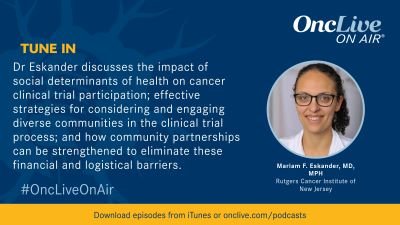
Social Determinants of Health on Cancer Clinical Trial Participation
Dr. Mariam F. Eskander joins the OncLive podcast to discuss the social determinants of health on cancer clinical trial participation and various strategies to eliminate barriers for diverse communities. Listen here.
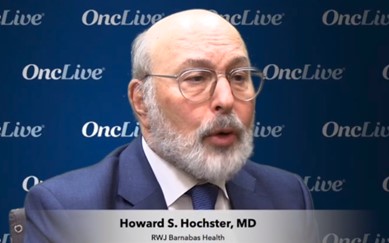
The 'Why' of Clinical Trials
Dr. Howard Hochster discusses the importance of clinical trial participation in cancer care and highlights the use of immunotherapy.
Scientific Advances in Hematology/Oncology at Rutgers Cancer Institute
Three Fast Facts About Cancer Clinical Trials
How RWJBarnabas Health and Rutgers Cancer Institute offer tomorrow’s treatments today.