De Laboratory Research Overview
1. Computational Biology and Health AI
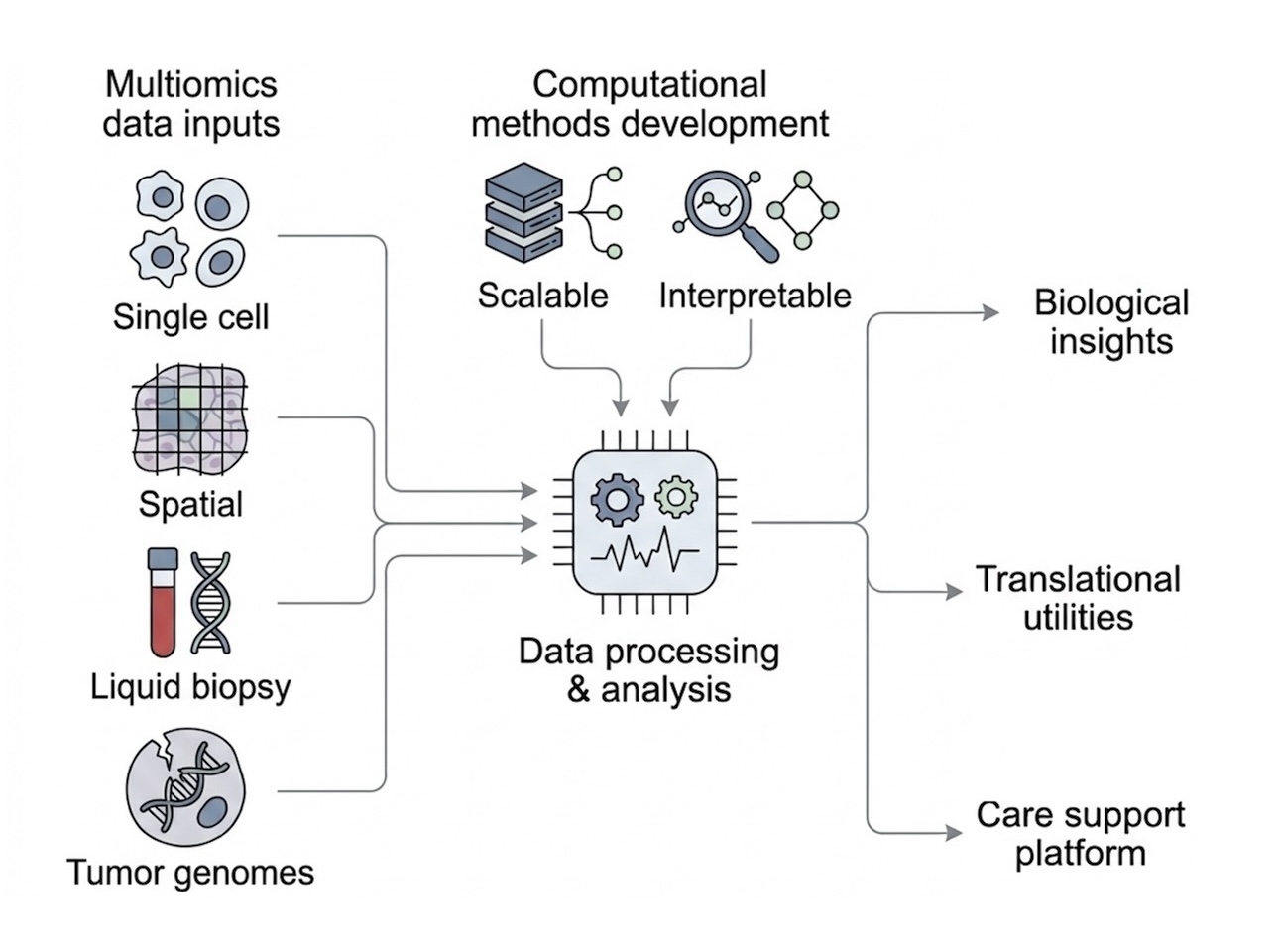
A cross-cutting focus of our laboratory is the development of computational methods and AI applications that extract biologically meaningful insights from increasingly complex datasets. We develop scalable and interpretable computational methods and resources for analyzing tumor genomes, single-cell transcriptomes, spatial transcriptomic data, and low-biomass microbial sequencing. We have also developed AI-based platforms, including OncoInterpreter.ai, an interactive platform designed to support clinical care by providing individualized summaries and data-driven analytics.
2. Functional Interactions in Cancer Microenvironments
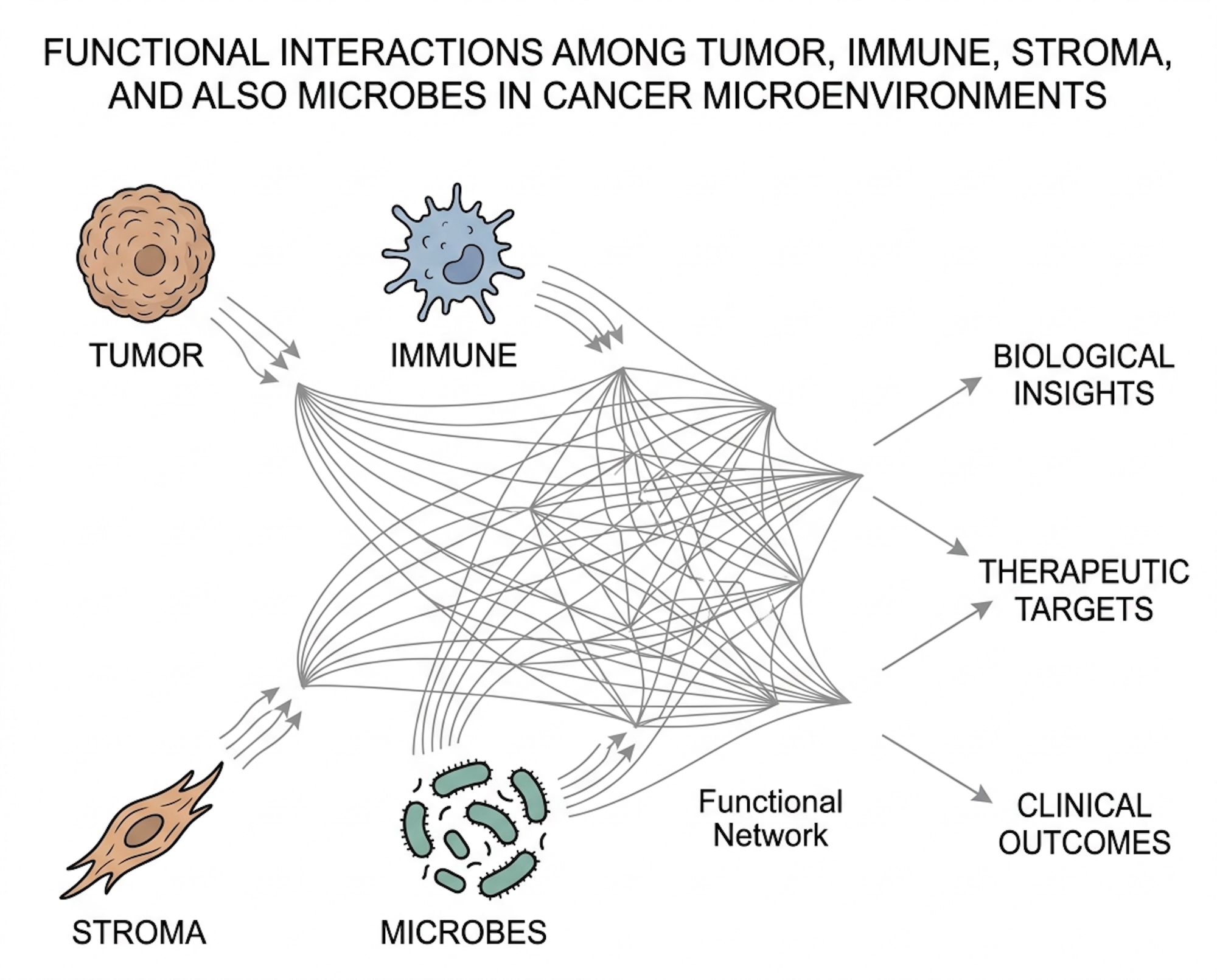
Tumor cells interact with immune, stromal, and, in some cases, microbial populations within the tumor microenvironment to shape disease progression and clinical outcomes. We integrate genomic, single-cell, and spatial approaches to characterize functional, context-dependent interactions among tumor, stromal, and immune compartments. We also study tumor-associated microbial communities and their interactions with host cells, developing SAHMI and PRISM to distinguish authentic microbial signals from noisy, low-biomass sequencing data. By integrating bulk, single-cell, spatial, and microbial data, we seek to define functional interactions within cancer ecosystems and identify their roles in tumor progression, therapeutic response, and clinical outcomes.
3. Cancer Evolution, Heterogeneity, and Liquid Biopsy
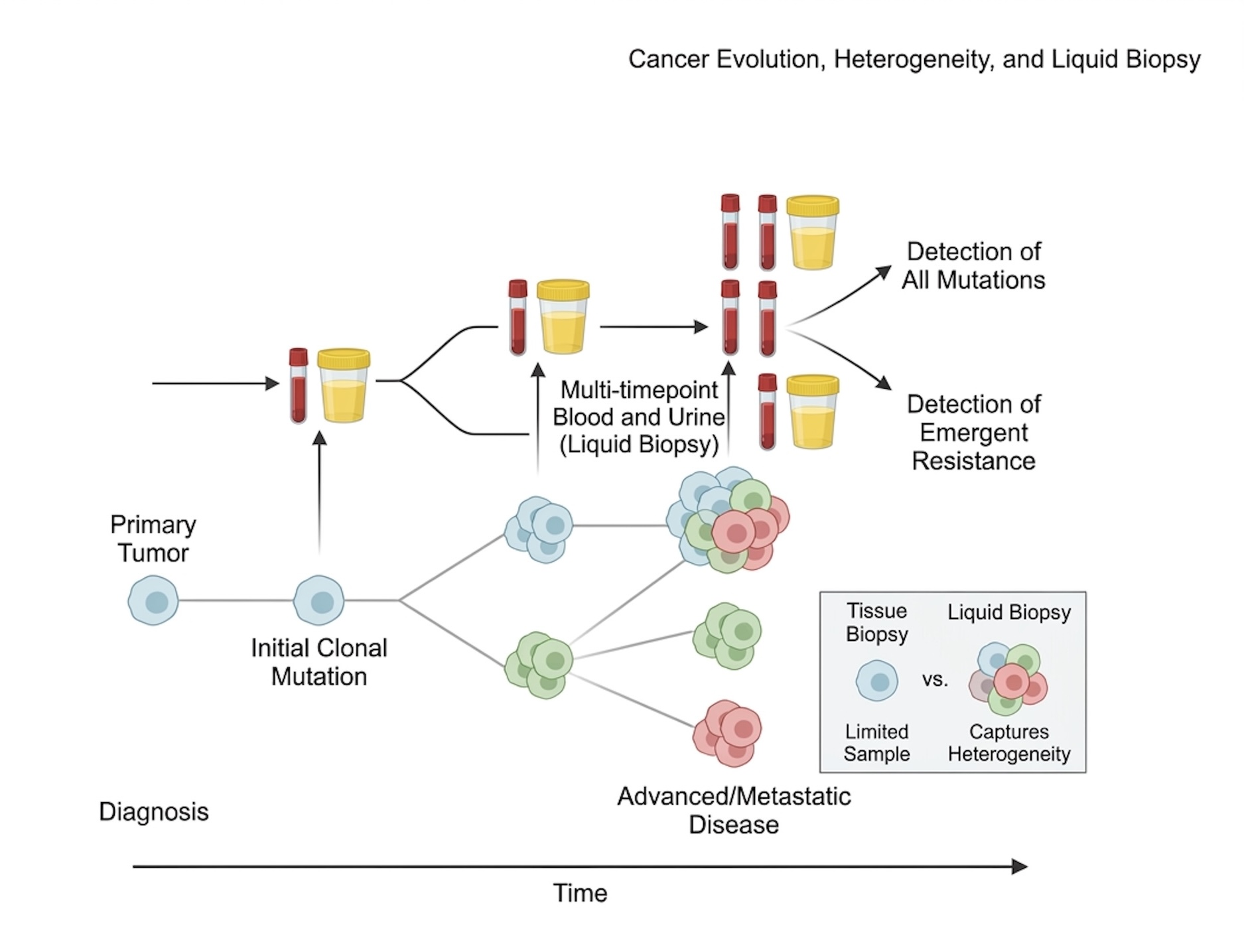
Cancer evolution is shaped by interacting genetic and nongenetic processes that generate heterogeneous and dynamic tumor cell states. Our laboratory studies somatic evolution, mutational processes, and the mechanisms underlying metastasis and treatment resistance, while increasingly focusing on liquid biopsy as a window into tumor evolution. We develop computational approaches to track tumor dynamics using circulating cell-free DNA (cfDNA) and cell-free RNA (cfRNA), with an emphasis on identifying clinically meaningful molecular changes over time. Our work also examines how biological and technical factors influence the detectability of tumor-derived signals in liquid biopsy, with the goal of improving molecular monitoring, treatment-response assessment, and early detection of emerging disease.
To learn more about the current research news and publications from the lab please visit www.sjdlab.org.